
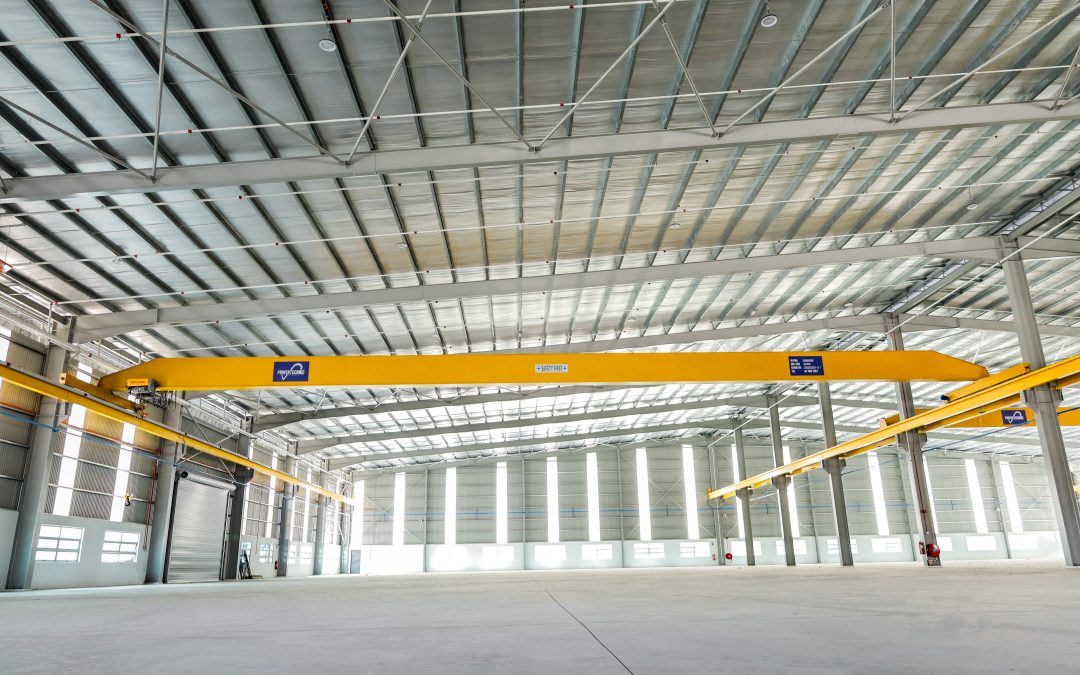
Efficient material handling is essential for smooth warehouse and manufacturing operations. From moving heavy machinery to transporting raw materials, businesses need reliable equipment to handle daily lifting activities.
One solution widely used in industrial facilities is warehouse cranes. These lifting systems help businesses move heavy loads, optimise workspace and improve overall operational efficiency.
But how exactly do warehouse cranes make a difference? Let’s explore.
What Are Warehouse Cranes?
Warehouse cranes are lifting systems designed to move heavy materials, equipment and goods within industrial facilities.
Unlike forklifts and other floor-based equipment, overhead crane systems utilise elevated structures to transport materials across designated working areas.
Common types include:
-
Overhead Crane: Moves materials along elevated runway beams.
-
Gantry Crane: Uses supporting legs to carry and move the crane structure.
-
Jib Crane: Lifts materials within a specific working radius.
-
Monorail Crane: Moves loads along a fixed overhead track.
Each type serves different lifting requirements depending on the facility layout and operational needs.
5 Ways Warehouse Cranes Improve Material Handling Efficiency
1. Faster Material Movement
Warehouse cranes help move heavy materials between storage areas, production lines and workstations.
Key benefits:
-
Reduce unnecessary material handling steps
-
Support repetitive lifting activities
-
Improve movement of heavy and bulky loads
2. Better Space Utilisation
Overhead crane systems utilise vertical space, allowing materials to be transported above the working area.
This can help businesses:
-
Keep more floor space available
-
Reduce dependence on certain floor-based lifting equipment
-
Maintain a more organised workspace
3. Easier Handling of Heavy Loads
Moving oversized or heavy materials can be challenging without suitable lifting equipment.
Warehouse cranes can be designed to handle different load capacities based on operational requirements.
Common materials handled include:
-
Steel beams and metal components
-
Heavy machinery parts
-
Industrial equipment
-
Manufacturing materials
4. Improved Workflow and Productivity
An appropriately positioned crane system helps streamline material transfers between different operational areas.
For example:
Raw Materials → Production → Assembly → Finished Goods
By supporting these movements, warehouse cranes can help reduce unnecessary handling and improve workflow coordination.
5. Support Safer Lifting Operations
Handling heavy loads requires proper lifting equipment and established safety procedures.
Warehouse cranes can reduce the need for certain manual lifting activities when used correctly.
Important safety considerations include:
-
Correct lifting capacity
-
Proper load attachment
-
Regular inspection and maintenance
-
Trained crane operators
-
Compliance with applicable safety requirements
Which Type of Warehouse Crane Is Suitable for Your Facility?
Not every industrial facility has the same lifting requirements. Here’s a quick comparison of commonly used crane systems.
| Crane Type | Main Features | Suitable Applications |
|---|---|---|
| Overhead Crane | Runs along elevated runway beams | Factories, warehouses and workshops |
| Gantry Crane | Supported by independent legs | Outdoor yards and industrial areas |
| Jib Crane | Operates within a defined radius | Workstations and assembly lines |
| Monorail Crane | Travels along a fixed overhead track | Production and material transfer lines |
Choosing the right crane depends on your lifting capacity, warehouse layout, available space and operating requirements.
What to Consider Before Choosing a Warehouse Crane?
Before investing in a crane system, evaluate these six important factors:
| Factor | What to Check |
|---|---|
| Lifting Capacity | Maximum weight of materials |
| Lifting Height | Required vertical lifting distance |
| Crane Span | Horizontal working area |
| Warehouse Layout | Available space and structural support |
| Operating Frequency | Daily usage and lifting requirements |
| Maintenance | Inspection and long-term servicing needs |
A proper assessment helps ensure that the selected crane is suitable for your facility and operational needs.
Why Consider an Overhead Crane System?
For facilities with suitable structural support, an overhead crane system can be an effective solution for regular industrial lifting operations.
Its key advantages include:
-
Utilises overhead space
-
Supports heavy material handling
-
Allows horizontal and vertical load movement
-
Can be configured for different lifting requirements
-
Integrates into manufacturing and warehouse workflows
The right configuration should always be determined based on the facility’s structural conditions and lifting requirements.
Improve Your Material Handling Operations with Powertechnic
Choosing suitable lifting equipment is an important step towards improving warehouse and industrial operations.
At Powertechnic, we provide industrial lifting solutions, including Overhead Crane Systems, to support different material handling requirements.
Whether you are upgrading an existing facility or planning a new industrial setup, our team can help you explore a suitable lifting solution.
Looking for an industrial lifting solution? Contact Powertechnic today to discuss your requirements and learn more about our Overhead Crane System.
Disclaimer
We hope you found this article helpful and informative. Please note that the content provided is for general informational purposes only and should not be construed as professional advice. It may not reflect the full scope of services offered by Powertechnic Handling Equipment (M) Sdn. Bhd.
For tailored guidance, we strongly recommend consulting with a qualified industry professional. To receive expert advice and crane recommendations specific to your project requirements, please reach out directly to our team.
While we strive to ensure the accuracy and completeness of the information shared in our blog posts, Powertechnic Handling Equipment (M) Sdn. Bhd. makes no warranties and assumes no responsibility for any errors, omissions, or outcomes arising from the use of this content.