Introduction
When people think of a data centre, they often picture endless rows of server racks, advanced cooling systems, and high-speed connectivity. But before any server is powered on, thousands of kilograms of mission-critical equipment must first arrive safely on site.
From server racks and UPS systems to battery cabinets and cooling units, every delivery depends on one critical area that is often overlooked — the loading bay.
A well-designed loading bay doesn’t just improve logistics; it helps protect valuable equipment, minimise handling risks, and keep projects on schedule.
Table of Contents
- The Journey Before Installation
- Why Loading Bays Matter
- How Dock Levellers Improve Safety
- Choosing the Right Dock Leveller
- Conclusion
The Journey Before Installation
Long before a data centre becomes operational, specialised equipment arrives in multiple stages throughout the construction and commissioning process.
These deliveries often include:
- Server racks
- UPS systems
- Battery cabinets
- Cooling equipment
- Electrical switchgear
- Spare parts
Many of these components are expensive, heavy, and highly sensitive to impact. Even minor handling issues can result in delays, additional costs, or equipment damage.
Why Loading Bays Matter
The loading bay is the first point of contact between incoming deliveries and the data centre facility.
Every truck arriving at the site must unload equipment safely and efficiently before installation begins.
Without proper loading infrastructure, forklifts may encounter uneven gaps or height differences between the vehicle and the loading dock, increasing the risk of accidents and product damage.
For mission-critical facilities such as data centres, maintaining a smooth and controlled loading process is essential.
How Dock Levellers Improve Safety
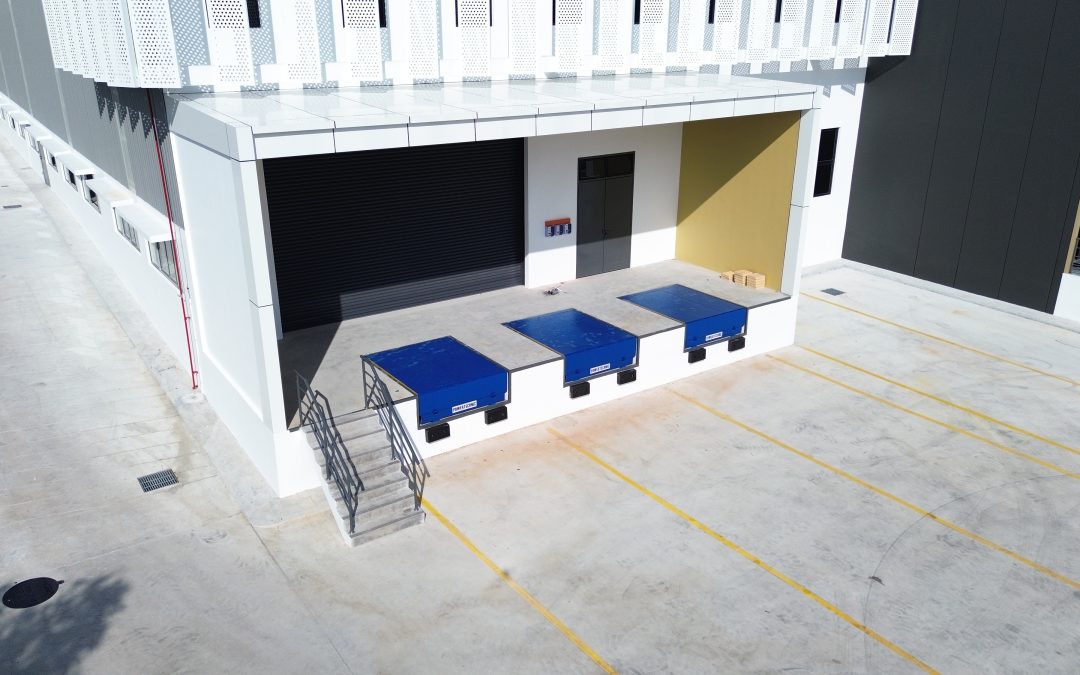
A Dock Leveller creates a smooth bridge between the loading dock and the delivery truck, allowing forklifts to transport heavy equipment safely.
Key benefits include:
- Smooth forklift movement
- Reduced risk of equipment damage
- Improved operator safety
- Faster loading and unloading
- Increased operational efficiency
- Better handling of high-value equipment
For facilities receiving frequent deliveries, dock levellers help streamline operations while maintaining workplace safety.
Choosing the Right Dock Leveller
Not every loading bay has the same operational requirements.
When selecting a dock leveller, consider:
- Load capacity
- Platform size
- Frequency of truck arrivals
- Type of material handling equipment
- Future expansion plans
Choosing the right specification ensures long-term reliability and supports the operational demands of modern industrial facilities.
Conclusion
Behind every successful data centre is a carefully planned logistics process.
While servers, cooling systems, and backup power often receive the most attention, the loading bay plays an equally important role in ensuring every piece of equipment reaches its destination safely.
By investing in the right loading infrastructure, including a reliable dock leveller, facility owners can improve safety, reduce handling risks, and support efficient project execution from day one.
Disclaimer
We hope you found this article helpful and informative. Please note that the content provided is for general informational purposes only and should not be construed as professional advice. It may not reflect the full scope of services offered by Powertechnic Handling Equipment (M) Sdn. Bhd.
For tailored guidance, we strongly recommend consulting with a qualified industry professional. To receive expert advice and crane recommendations specific to your project requirements, please reach out directly to our team.
While we strive to ensure the accuracy and completeness of the information shared in our blog posts, Powertechnic Handling Equipment (M) Sdn. Bhd. makes no warranties and assumes no responsibility for any errors, omissions, or outcomes arising from the use of this content.